
Intro - My keyboard layout journey
You can skip this if you don't care
You can skip this if you don't care
Ever since I joined the hobby, I have always been fascinated by ergonomics.
During my first few years, the HHKB 60% layout became my favorite, shortly followed by the “Alice” layout, which I initially thought would be my personal endgame.
A couple of years later, I started looking at 40% columnar keyboards as the next logical step, but I never really felt the need to try one. To be honest, I was simply scared of the adaptation period and did not think it would be worth the hassle. Over the following months, I tried some columnar keyboards like the Corne, and while I liked them, I really missed the premium aluminum custom cases I had been used to. The sound, the feel, and even the looks were missing from my experience with acrylic and FR4 ‘’cases’’, and the adaptation felt less enjoyable.
Many months later, I found a Cornelius R1 on the aftermarket, which is basically a premium aluminum non-split Corne. I bought it immediately, and looking back, that was probably the best decision I have ever made in the hobby. It might sound strange to some, but even though the Cornelius unibody is technically less ergonomic than a split design, the overall experience made me want to seriously commit to switching from the ancient row-stagger layout to a more logical and efficient columnar one. As a side note, I never used the six extra keys on the bottom-row, three on each side, of the Cornelius. This means the layout I was using was identical to a 3×6 Corne.
After a few months of adaptation and keymap changes, something finally clicked. I loved it. I understood why there is a niche of people praising this layout. There is no need to stretch your hands to reach modifiers or arrows. Everything is under your fingertips wherever you want it to be, and the columnar layout makes typing with all ten fingers very natural.
During my first few years, the HHKB 60% layout became my favorite, shortly followed by the “Alice” layout, which I initially thought would be my personal endgame.
A couple of years later, I started looking at 40% columnar keyboards as the next logical step, but I never really felt the need to try one. To be honest, I was simply scared of the adaptation period and did not think it would be worth the hassle. Over the following months, I tried some columnar keyboards like the Corne, and while I liked them, I really missed the premium aluminum custom cases I had been used to. The sound, the feel, and even the looks were missing from my experience with acrylic and FR4 ‘’cases’’, and the adaptation felt less enjoyable.
Many months later, I found a Cornelius R1 on the aftermarket, which is basically a premium aluminum non-split Corne. I bought it immediately, and looking back, that was probably the best decision I have ever made in the hobby. It might sound strange to some, but even though the Cornelius unibody is technically less ergonomic than a split design, the overall experience made me want to seriously commit to switching from the ancient row-stagger layout to a more logical and efficient columnar one. As a side note, I never used the six extra keys on the bottom-row, three on each side, of the Cornelius. This means the layout I was using was identical to a 3×6 Corne.
After a few months of adaptation and keymap changes, something finally clicked. I loved it. I understood why there is a niche of people praising this layout. There is no need to stretch your hands to reach modifiers or arrows. Everything is under your fingertips wherever you want it to be, and the columnar layout makes typing with all ten fingers very natural.
Let’s finally talk about keycaps, the main reason we are here.
I tried multiple profiles over the years, but when I was using row staggered keyboards, I mostly stuck with GMK’s CYL profile. The color brilliance, design possibilities, appearance, sound, and feel are still, at least for me, unmatched. When you switch to an ortho or columnar keyboard, though, that profile is simply not the best choice.
Keycap profiles are an important part of keyboard ergonomics, so I decided to explore the topic more deeply. The project that made the most sense to me was KLP Lamé. You can check it out here.
While the solution already exists, a dedicated profile from a reputable manufacturer like GMK could be an exciting offering. It would give users something more premium straight out of the box, both visually and in terms of sound and feel, compared to 3D printed keycaps or risers and tilters while staying true to the iconic cylindrical Cherry shape. Let’s also add that not anyone can or wants to 3D print their keycaps.
As for GMK themselves, this could be an opportunity to tap into a niche market that isn’t really covered at all by their existing profiles, CYL and MTNU.
Keycap profiles are an important part of keyboard ergonomics, so I decided to explore the topic more deeply. The project that made the most sense to me was KLP Lamé. You can check it out here.
This idea has already been explored in the past in various forms, not only through keycap profiles (like Signature Plastics SA, which we will talk about later), but also through MX risers/tilters and curved PCBs (such as the recently released Smurve80, for example).
The logic behind it is to mimic the shape of keywell keyboards (hence the name CYwell) on flat PCBs in order to reduce the distance between the home row and the upper and lower rows, something that uniform keycaps alone cannot achieve.
So that is it, right?
Just print your KLP Lamé and you are done? Not quite.
Just print your KLP Lamé and you are done? Not quite.
While the solution already exists, a dedicated profile from a reputable manufacturer like GMK could be an exciting offering. It would give users something more premium straight out of the box, both visually and in terms of sound and feel, compared to 3D printed keycaps or risers and tilters while staying true to the iconic cylindrical Cherry shape. Let’s also add that not anyone can or wants to 3D print their keycaps.
As for GMK themselves, this could be an opportunity to tap into a niche market that isn’t really covered at all by their existing profiles, CYL and MTNU.
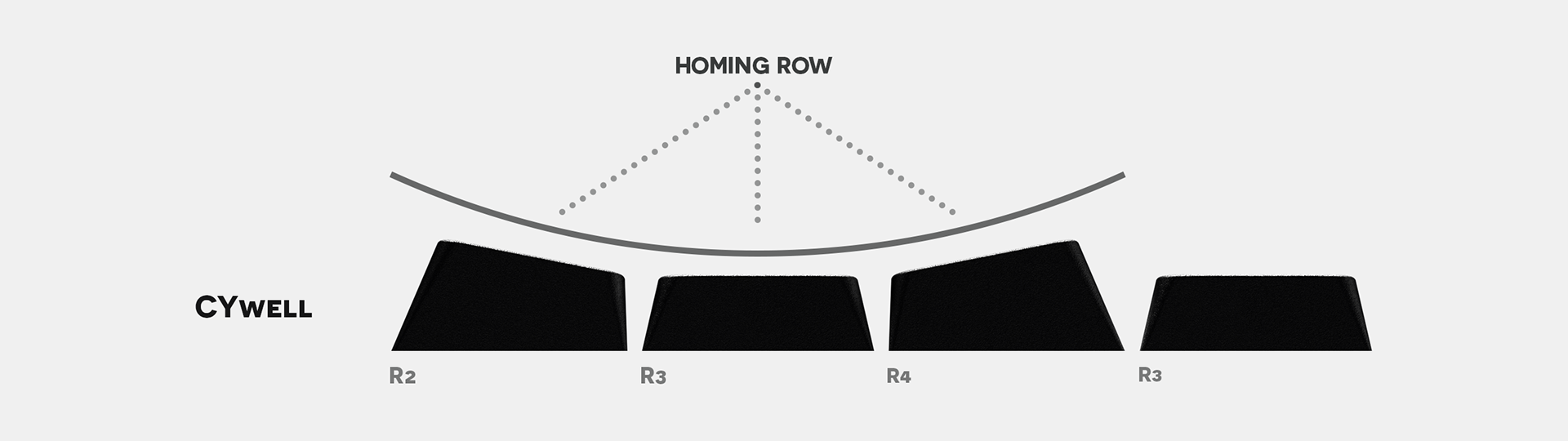

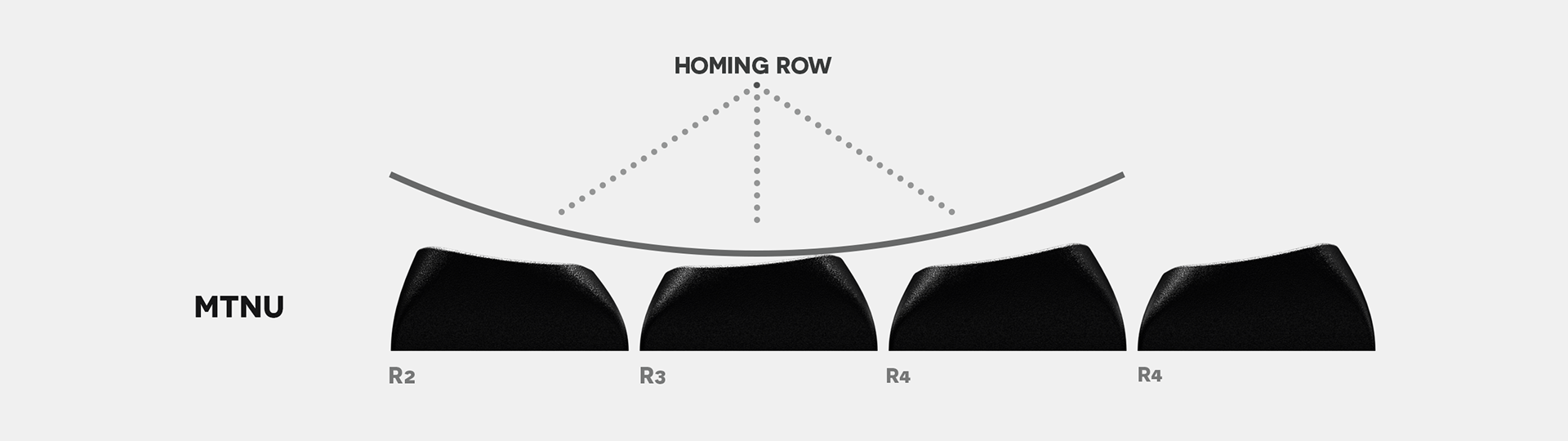
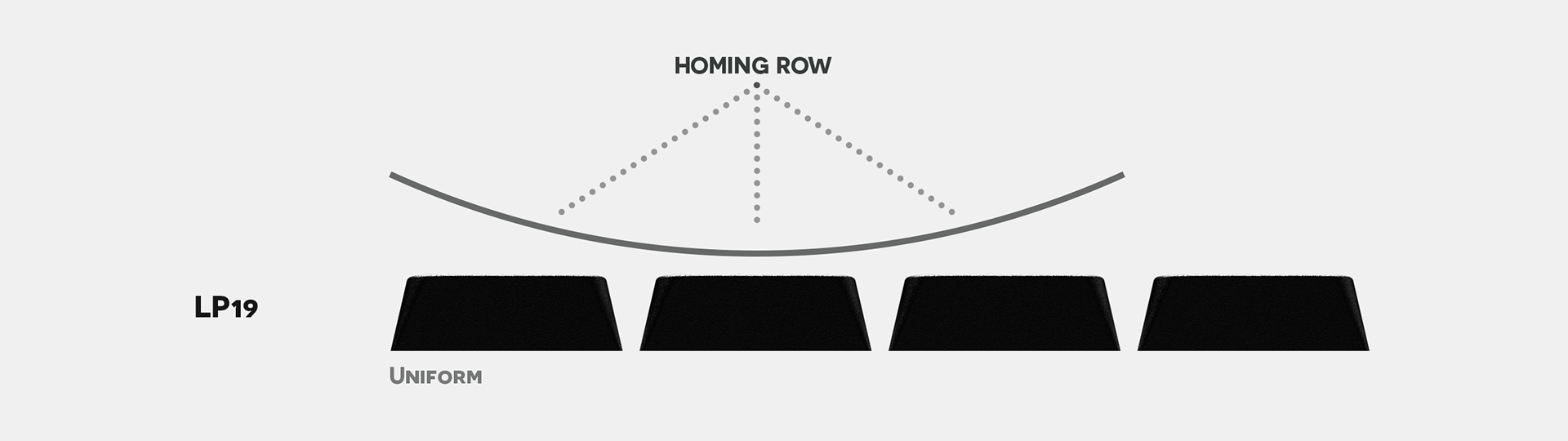
The idea is cool, but is it viable for GMK in today’s market?
In my opinion, it is worth at least a try for the following reasons:
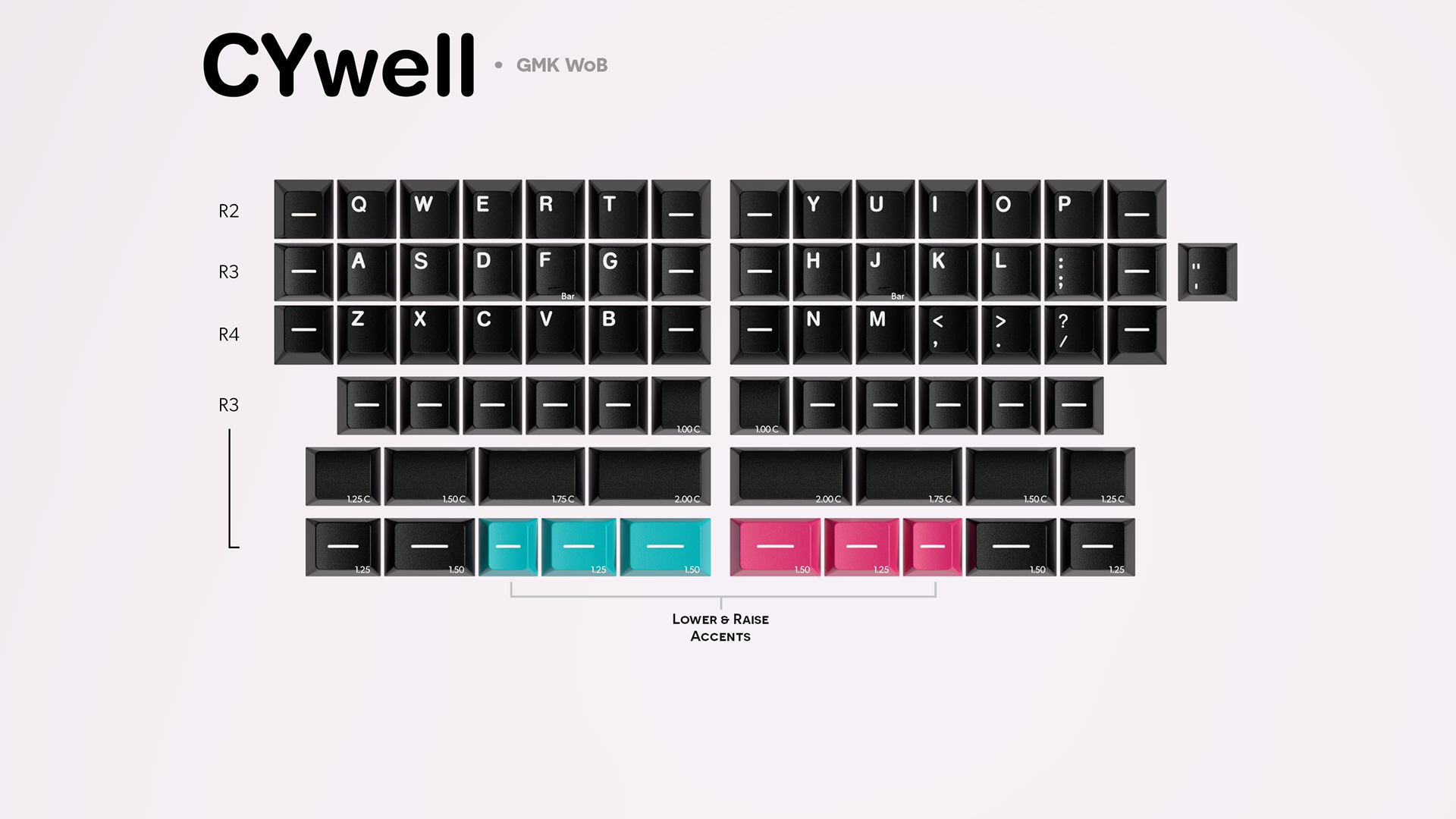
This “new” profile would not require fresh tooling. It is essentially a mix of CYL for R4 and R2, with R2 simply being a flipped R4, and GMK’s upcoming LP19 profile, a flat uniform CYL that some vendors have already shown on stream, for R3.
Kitting will be standardized with just one main kit and no child kits, since the number of keys needed is much lower than for CYL and MTNU (and LP19 when the profile will eventually come out, I’m sure). Just one kit and fewer keys mean lower costs for GMK, vendors, and customers.
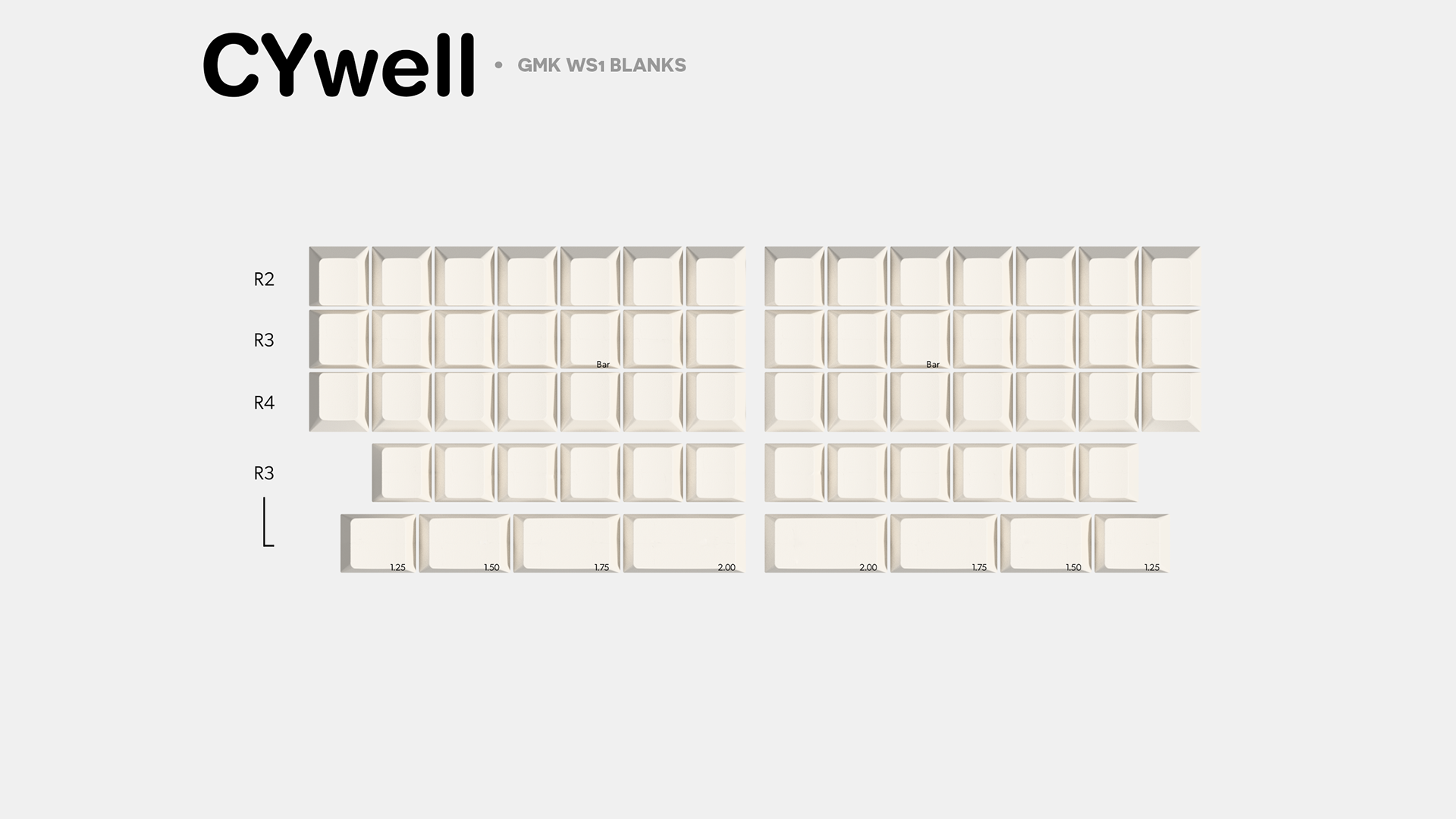
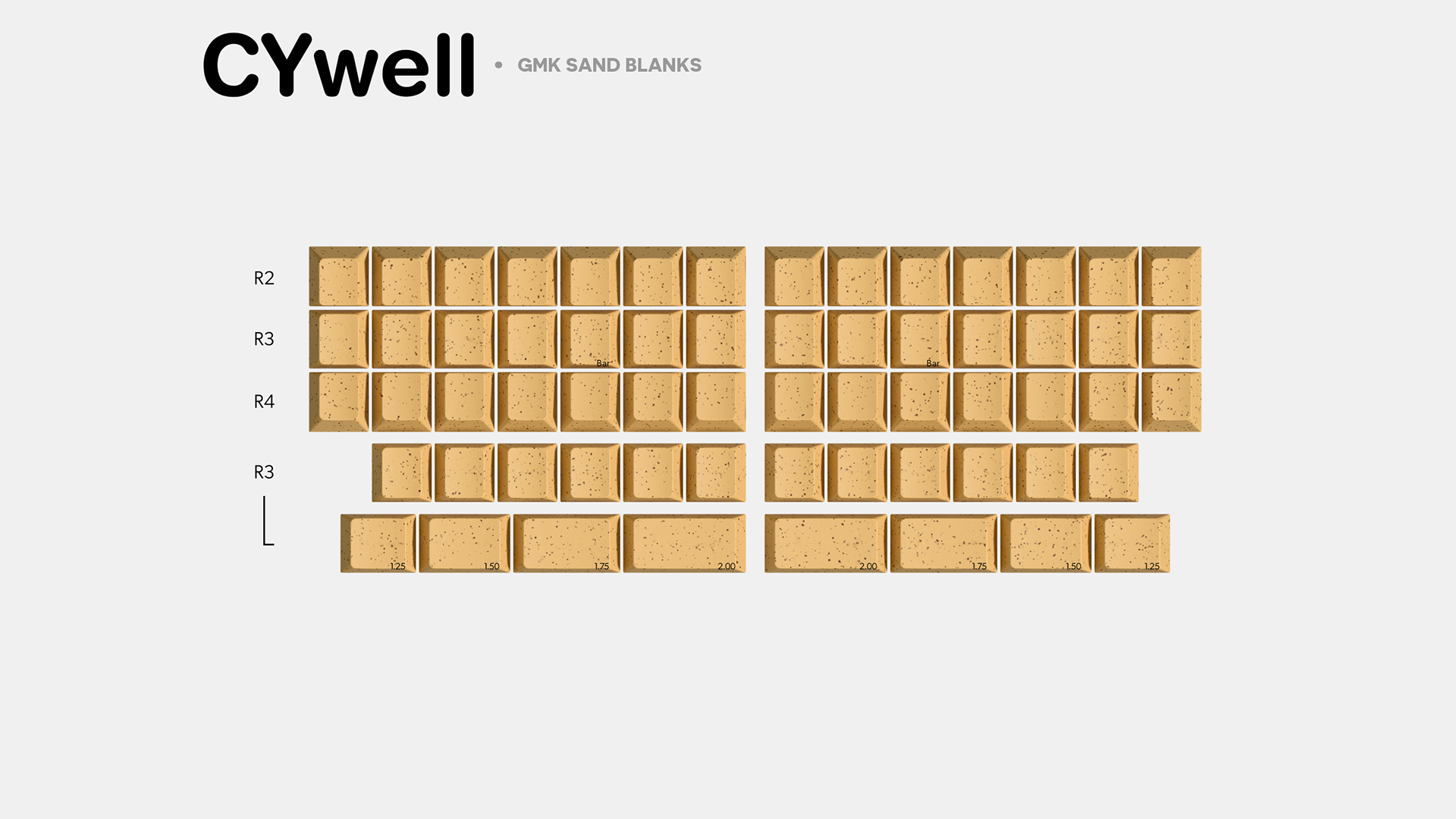
Since blanks are popular among the ortho and columnar community, and to avoid producing child kits for alternative layouts like Colemak or Dvorak, not to mention the lack of standardized modifier placement due to highly personalized key mapping, the first releases will be blanks in CR Black, WS1 White, or other GMK stock colors (The new special effects could be a compelling option for blanks as well, further setting GMK apart from the competition).
This would allow GMK to gauge real market interest. If there's enough demand, more complex designer-made sets could follow later.
The opportunity to cost ratio makes sense to me. There is no need for new tooling, no new legend molds, and no doubleshot. Just a single small kit of blanks that covers a wide range of 40% ortho and columnar keyboards. I would say there’s also no need for cardboard packaging (for blanks in particular) if that reduces cost. In terms of commitment, it would be similar to producing a GMK CYL Alpha Kit, and not much more than that.
This “new” profile would not require fresh tooling. It is essentially a mix of CYL for R4 and R2, with R2 simply being a flipped R4, and GMK’s upcoming LP19 profile, a flat uniform CYL that some vendors have already shown on stream, for R3.
Kitting will be standardized with just one main kit and no child kits, since the number of keys needed is much lower than for CYL and MTNU (and LP19 when the profile will eventually come out, I’m sure). Just one kit and fewer keys mean lower costs for GMK, vendors, and customers.
Since blanks are popular among the ortho and columnar community, and to avoid producing child kits for alternative layouts like Colemak or Dvorak, not to mention the lack of standardized modifier placement due to highly personalized key mapping, the first releases will be blanks in CR Black, WS1 White, or other GMK stock colors (The new special effects could be a compelling option for blanks as well, further setting GMK apart from the competition).
This would allow GMK to gauge real market interest. If there's enough demand, more complex designer-made sets could follow later.
The opportunity to cost ratio makes sense to me. There is no need for new tooling, no new legend molds, and no doubleshot. Just a single small kit of blanks that covers a wide range of 40% ortho and columnar keyboards. I would say there’s also no need for cardboard packaging (for blanks in particular) if that reduces cost. In terms of commitment, it would be similar to producing a GMK CYL Alpha Kit, and not much more than that.
Proposed Standardized Kitting
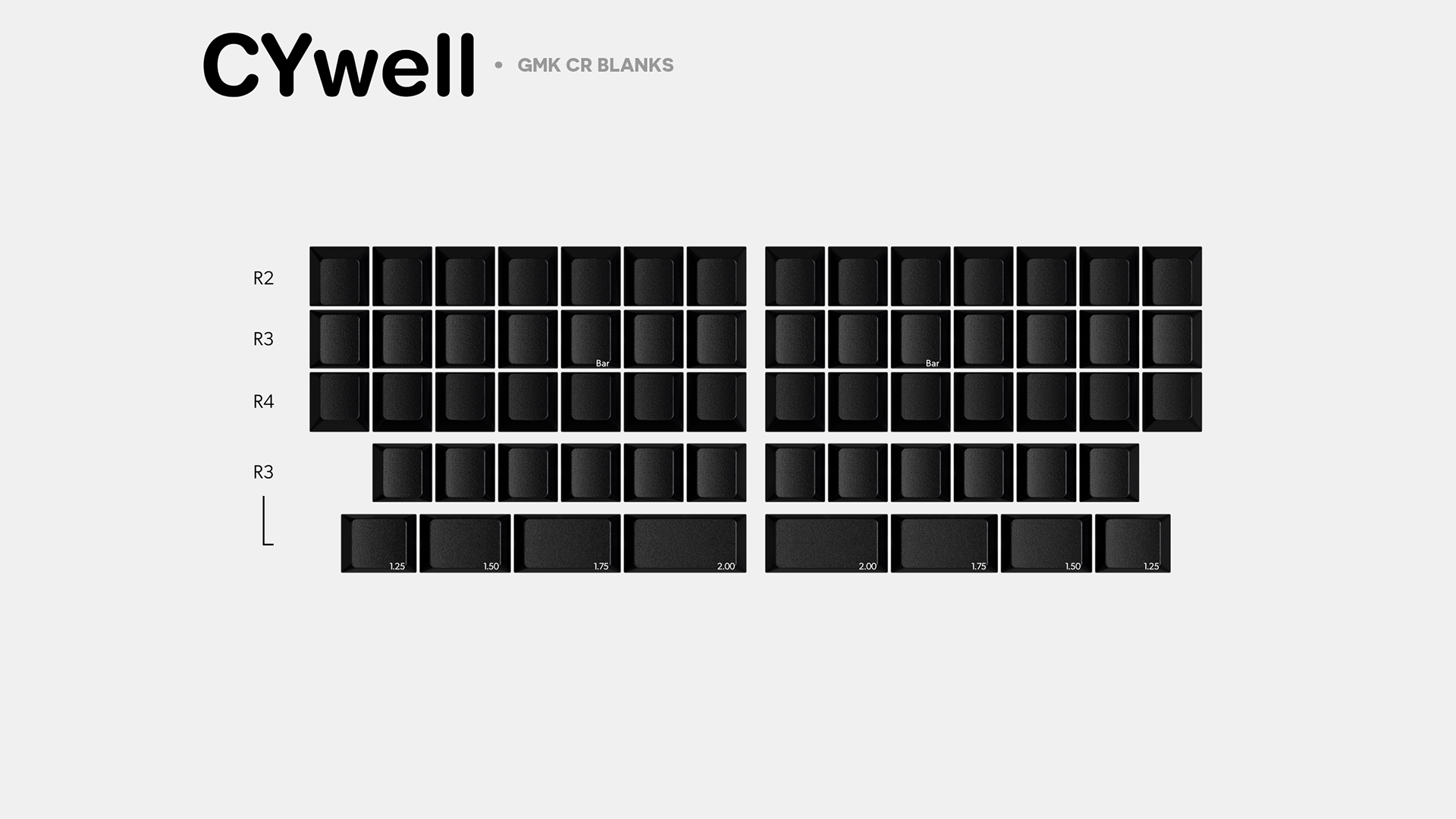
Some example set ideas
Essentials - CR & WS1 Blanks

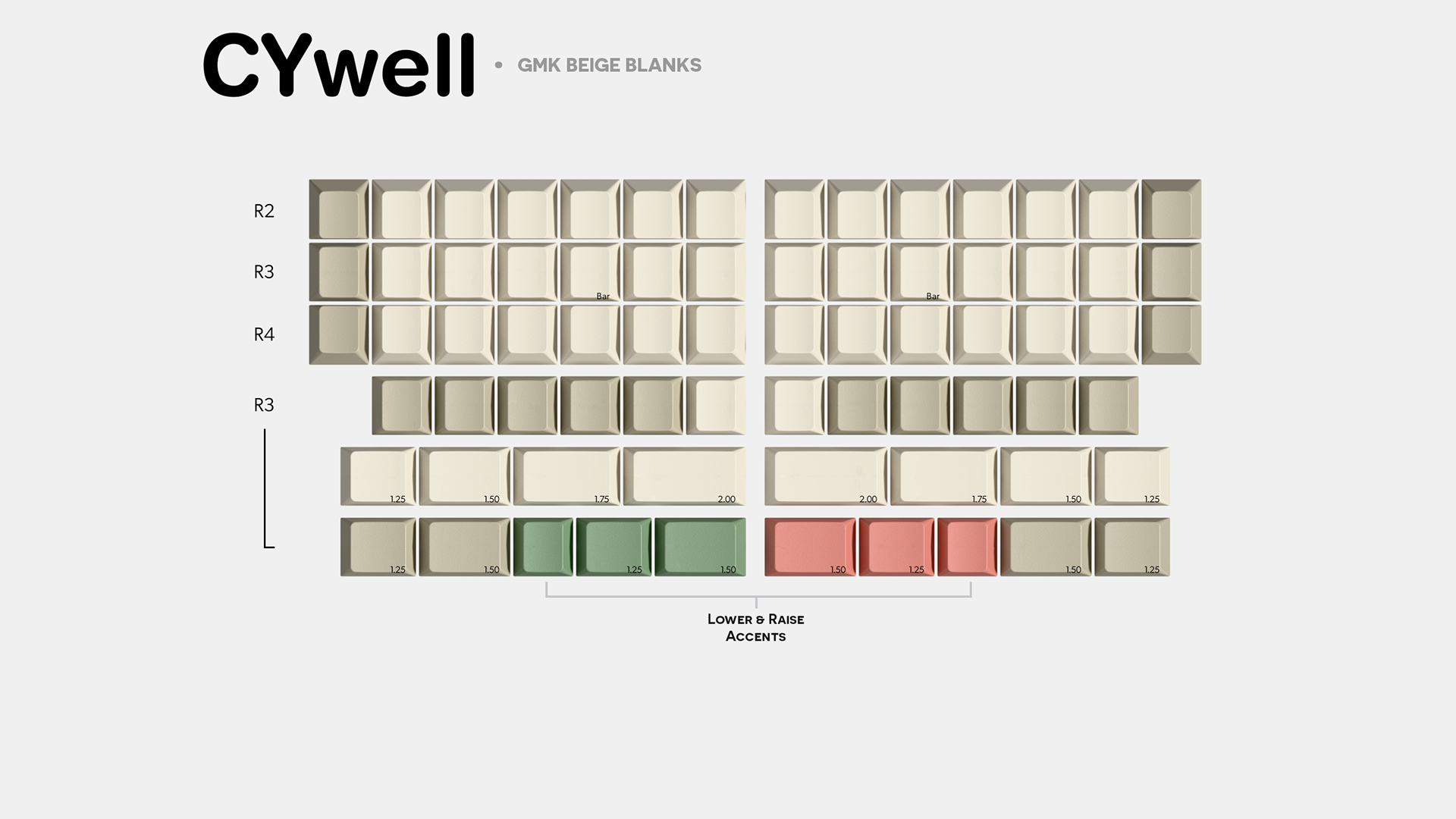
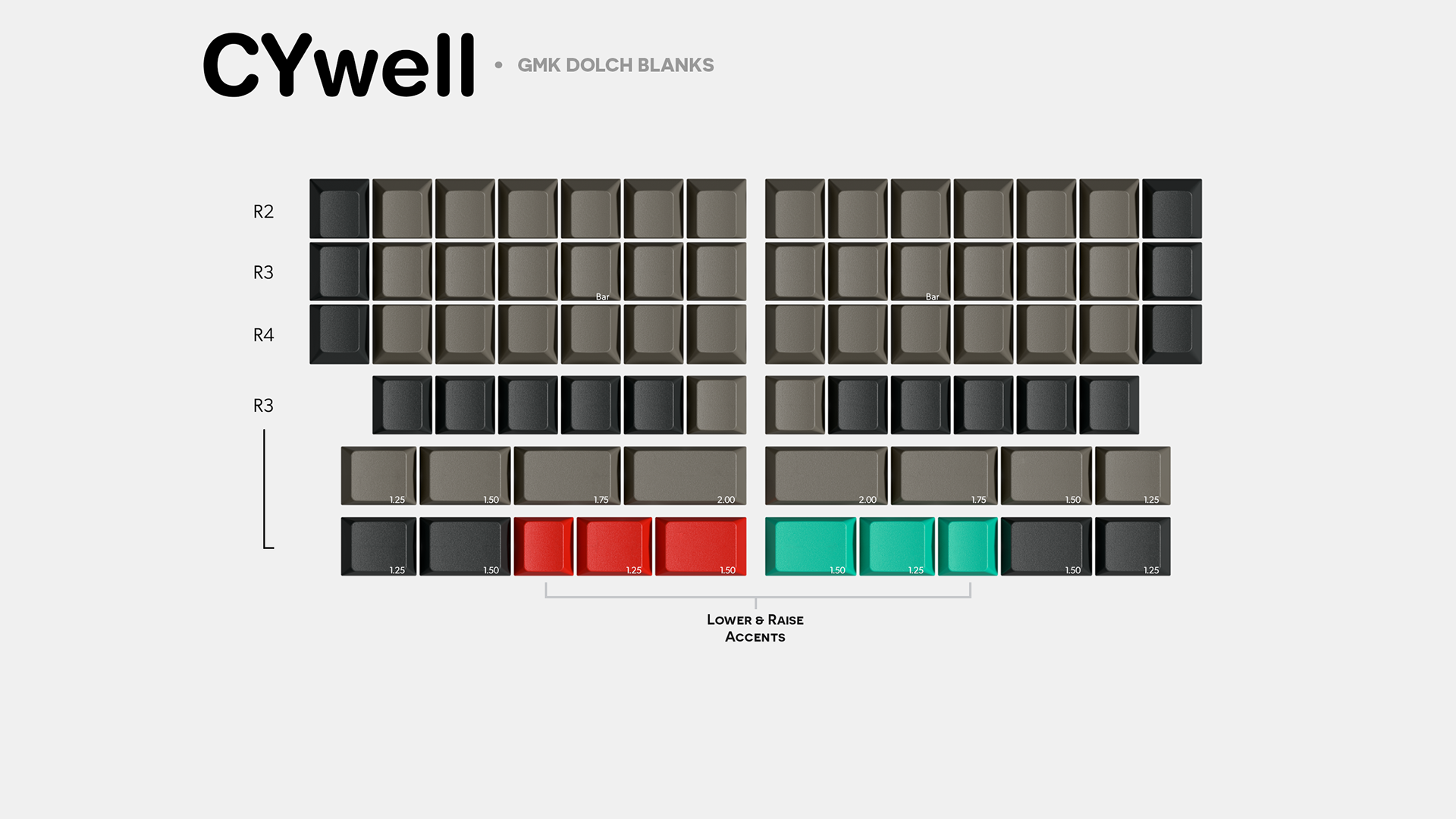
Classics - Beige & Dolch Blanks
Special Effects - Marble & Sand Blanks

QWERTY alpha legends with standardized icon modifiers
and Convex spacebars - WoB with accents
and Convex spacebars - WoB with accents
How does CYwell compare to existing options?
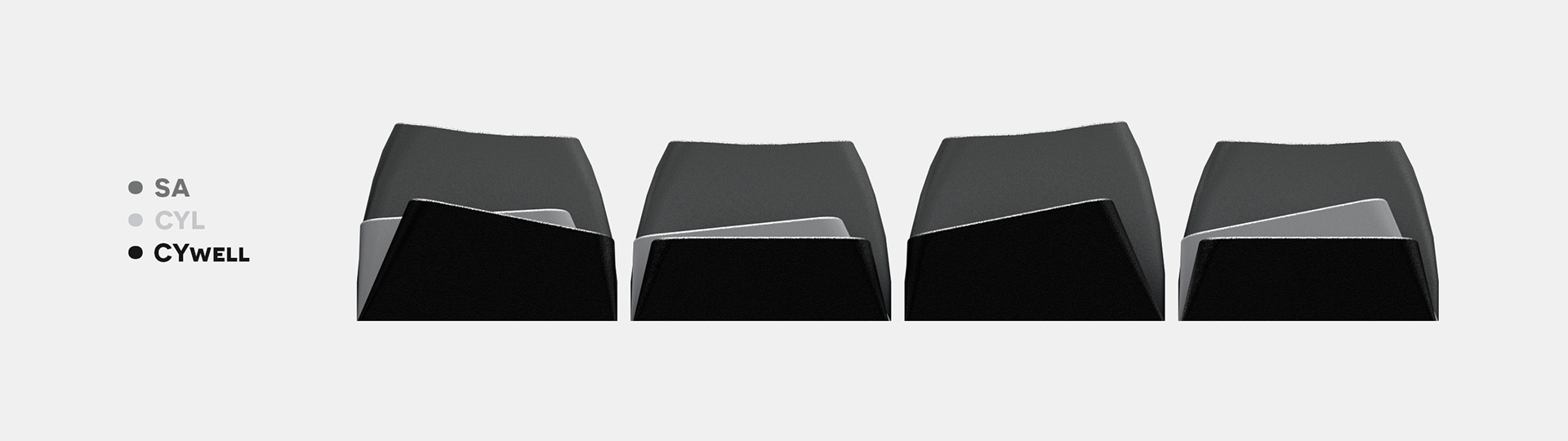
Let’s start by saying that other than KLP Lamè, another popular profile – Signature Plastics SA, specifically the R3 bottom-row variant – uses the same concept as CYwell. The main difference is that SA R2 and R4 are tilted 7 and -7 degree as opposed to KLP Lamè which is 15 and -15 degree. CYwell is right in the middle with 11 and -11. For all three these profiles, R3 is flat (0 degrees).
KLP Lamè has an optional dedicated shape for the thumb (we could call it R5), which is the same design as ‘’R3’’ but with a cut along the down side of the top profile: this makes touching the bottom edge of the keycap more comfortable and forgiving, and is also available with vertical orientation. Both CYwell and SA don’t have this feature, but CYwell has a big height advantage compared to SA, while also being cylindrical instead of spherical. This makes not having a dedicated thumb row much less of a disadvantage.
One thing I could potentially see being added in the future, as LP19 gains broader support for convex spacebars, is an entirely convex bottom row. Even though it’s technically not needed — or even preferred — by the majority of columnar users, it could still be worth considering. It’s also something we’ve already seen explored in other profiles, such as Matt3o’s recent PBS.
Overall, if maximum flexibility is the goal, 3D printing can’t really be beaten. CYwell, on the other hand, is aimed at people who don’t want to rely on 3D-printed keycaps and instead want something that makes sense straight out of the box for their MX 40% ortho or columnar keyboard, while also offering a more premium experience in terms of looks, sound, and feel compared to any comparable option.
KLP Lamè has an optional dedicated shape for the thumb (we could call it R5), which is the same design as ‘’R3’’ but with a cut along the down side of the top profile: this makes touching the bottom edge of the keycap more comfortable and forgiving, and is also available with vertical orientation. Both CYwell and SA don’t have this feature, but CYwell has a big height advantage compared to SA, while also being cylindrical instead of spherical. This makes not having a dedicated thumb row much less of a disadvantage.
One thing I could potentially see being added in the future, as LP19 gains broader support for convex spacebars, is an entirely convex bottom row. Even though it’s technically not needed — or even preferred — by the majority of columnar users, it could still be worth considering. It’s also something we’ve already seen explored in other profiles, such as Matt3o’s recent PBS.
Overall, if maximum flexibility is the goal, 3D printing can’t really be beaten. CYwell, on the other hand, is aimed at people who don’t want to rely on 3D-printed keycaps and instead want something that makes sense straight out of the box for their MX 40% ortho or columnar keyboard, while also offering a more premium experience in terms of looks, sound, and feel compared to any comparable option.